Showing posts with label Books. Show all posts

Wednesday, May 22, 2013

The Sound of a Wild Snail Eating--A Book Review


"My bed was an island within the desolate sea of my room. Yet I knew that there were other people homebound from illness or injury, scattered here and there throughout rural towns and cities around the world. And as I lay there, I felt a connection to all of them. We, too, were a colony of hermits." pg. 84

"There is a certain depth of illness that is piercing in its isolation; the only rule is uncertainty, and the only movement is the passage of time. One cannot bear to live through another loss of function, and sometimes friends and family cannot bear to watch. An unspoken, unbridgeable divide may widen. Even if you are still who you were, you cannot actually be who you are. Sometimes the people you know well withdrawal, and then even the person you know as yourself begins to change." pg. 131

    
    Elisabeth Tova Bailey is a fine writer; a much better writer than I will probably ever be. And her book, The Sound of a Wild Snail Eating, has gotten rave reviews and even won a few awards. And it is a big hit with the folks who frequent the likes of the Good Reads website and other book-related websites and forums. It came highly recommended to me from both people I trust and from internet sources that I look to for book suggestions. And all of this brought about a grand amount of anticipation on my part to get my hands on this little book. I was so sure that I would open up the covers and begin reading an account account akin to Thoreau's Walden or Muir's 1000 Mile Walk to the Gulf. But to my great avail, sadly it was nothing of the sort.


"Slime is the sticky essence of a gastropod's soul, the medium for everything in its life: locomotion, defense, healing, courting, mating, and egg protection. Nearly one-third of my snail's daily energy went into slime production. And rather than making a single batch of "all-purpose" slime, my snail had a species specific recipe for each of these needs and for different parts of its body. It could adjust the ingredients, just as a good cook would, to meet a particular occasion. And in a catastrophic accident in which a snail is squashed, it can release a flood of lifesaving, medicinal mucus packed with antioxidants and regenerative properties." pg. 71

    I wanted so badly to like this book because one of my fondest memories is of spending a week hiking the Foothills Trail in South Carolina with my youngest sister and mom and taking the time one afternoon to watch a snail eat. It was one of the most amazing things I have ever watched. And I was hoping Bailey's account would put the feelings I experienced from watching the wild snail eat into words. And I really didn't want to say or write a post saying I didn't like it because of how much I wanted to like this book. Each night I would read a few more pages hoping to come upon the section in the book that would really change things for me. I was waiting and waiting for that magic paragraph where Bailey would take the emotions I felt and turn them into prose, but the last page came and went and I never got to that paragraph. I do hope you will read it and tell me why you liked it and how I missed the goodness of it. I may, as I have done in the past, read it again in an attempt to find the goodness in it. It took me three full readings of, The Catcher and the Rye, before I saw what Salinger was trying to really say. I have tried to explain many times that I am an amateur reader at best and this may be the occasion where you truly see that it is the truth.


    There were two items I disliked in the book and which seemed to ruin it for me. The first was that Bailey writes as the stereotypical cold and distanced scientist when it comes to both the snail and her illness. It felt at time as if I were reading a science textbook, but it wasn't the relaying of facts that gave this impression, it was rather the way the writing aside from a few high points, felt void of emotion. I did not expect there to be sappiness on every page or for it to be a great expose of sentimentalism, but I did want there to be the emotionalism that I've come to love and admire from naturalists like this quote from John Muir, 

    “No synonym for God is so perfect as Beauty. Whether as seen carving the lines of the mountains with glaciers, or gathering matter into stars, or planning the movements of water, or gardening - still all is Beauty!” 

   But this type of emotion seemed to be void from this book and Bailey wrote as one detached from both nature and from her own personal illness that forced her into the "lonely isolation" she writes from. Her descriptions of the snail and her observations of the snail do contain emotion at times and she even seems amazed at the actions of the snail, but it just seems to be missing something that I felt it needed. It could also just be me. Maybe you will grab the book, a warm cup of coffee or a cold limeade, and settle in for an afternoon of reading and maybe you will feel what she was trying to get across. I just did not feel it. 

   And the second item I found in this book that really kept getting to me was Bailey's constant mentioning of or her dogged dedication to the "evolution" of the snail species as well as the evolution of all species. I fully understand that the theory of evolution, though invalidated by truly scientific evidence (observable, measurable  repeatable evidence), is believed by most all people, especially academics. I know this. I teach science for a living. I use both Christian and Secular textbooks. I have been to museums all over the country and they are full of the "facts" of many people's grand theories about how things might have come about. I can usually stand a small bit of an author's obligatory need to mention his or her dedication to the evolution of all things, but Bailey seems to mention it at every turn. And what I found to be most distracting to me was that she would either mention something amazing about a snail; whether it be it's slime, or eating habits, or ability to go dormant, or their odd and varied reproduction processes. And she would either precede or conclude these true facts about snails with a conjecture of some other scientist's theory about something involving evolutionary theory and the chanced development of something that makes the snail perfect for what it is. And this for me is pure lunacy of which it is hard for me accept. It is not the existence or presence of a theory that is different from one I hold to be true that seems crazy to me, but rather it is the blind dedication to something that doesn't need to be true in order for something to be seen as amazing. Bailey could have written an account of her observations of her snail and never mentioned how it may have evolved and it would have been a good and truly scientific account. I just kept finding it amazing that she would write of something so intricate and then would attribute it to chance adaptation and mutations

   I would have let this dedication to evolution to go and just chalked it to being a book involving aspects of science that was written after the 1960's until I read her epilogue where she describes in detail both the acquiring of her snail knowledge and more aspects about the snail species and of her illness. She writes of genetic mutations that once acquired in her body wreaked havoc on her and in her poor body. And this is where I have lost patience or even tolerance with writers, speakers, scientists, etc. Evolution, though parts of it being found true and possible at times, is a scientific theory. Theories, by definition, lack the evidence in order to be made into laws, which also by definition, are true in every aspect as long as certain perimeters exist. However, nowadays, it seems that one either believes evolution to be wholeheartedly true or they are ignorant and foolish. It would seem crazy if this were felt about some other theory, say something economic like Keynesian economics or say whether or not Bigfoot exists. It would seem ludicrous for whole groups of people to force those around them to believe in something where there exists more than one field of thought about an item and no true science or proof for the belief. And yet, with evolution, this is this par for the course. And what frustrates to no end at times is if one truly takes the time, as Bailey did, to observe nature, it seems almost hard for me to comprehend how one could throw all the brilliance and intricate complexity that is found in even one square foot of nature to the winds of chance and mutation, but Bailey, as well as most writers and thinkers today do this. 

    Now, please do not read this as a demand for them to just believe as I believe because I will not do as they do. I do not expect them to observe the nature that surrounds them and then write a brilliant piece on how Genesis 1 & 2 are real and they have proved the existence of the triune God by watching a snail eat. I do not want this, but I do expect for them to think and truly focus on the images they are seeing and put that up against the knowledge and facets of evolution that they know to be true and those that are merely the thoughts of men. I do not see how one could explain the perfect complexities of snail slime/mucus and then attribute it all to perfect adaptation or genetic mutation over long periods of time while being forced to lie in a bed because of a genetic mutation that has almost taken everything that she holds dear from her. Knowing full well with enormous amounts of true scientific evidence, the observable, measurable, and repeatable type of evidence, that mutations and adaptations only leave an organism with no new traits and mutations at best leave organisms with odd, seemingly unuseful traits, say like a dog with two colored eyes or a person who is double-jointed or in the worst case scenario, the mutations being terminal. The mutations don't aid in their survival but rather take away from it or end up being a non-factor. 

   I know that I am beating an old, decomposed and long dead horse, but it just seems odd to me and a bit tragic to read an author, like Bailey, who is a very fine writer, and read several pages about how a snail's reproduction processes and how they are hermaphrodites and how this allows them to regenerate their species in a full variety of ways depending on the current environmental conditions and then get to watch the whole reproductive process take place and then chalk it all up to a theory where no true evidence exits while watching real, true science taking place in front of your very own eyes that sit in your ravaged body that is being torn apart from a pathogen and its mutations and say that the snail developed these amazing and awe-inspiring reproductive processes through millions of years of constant adaptation and genetic mutation. It just doesn't add up to me and the longer I watch nature and the longer I observe even the most minute aspects of the world around me, the harder it becomes for me to understand this line of thought. 
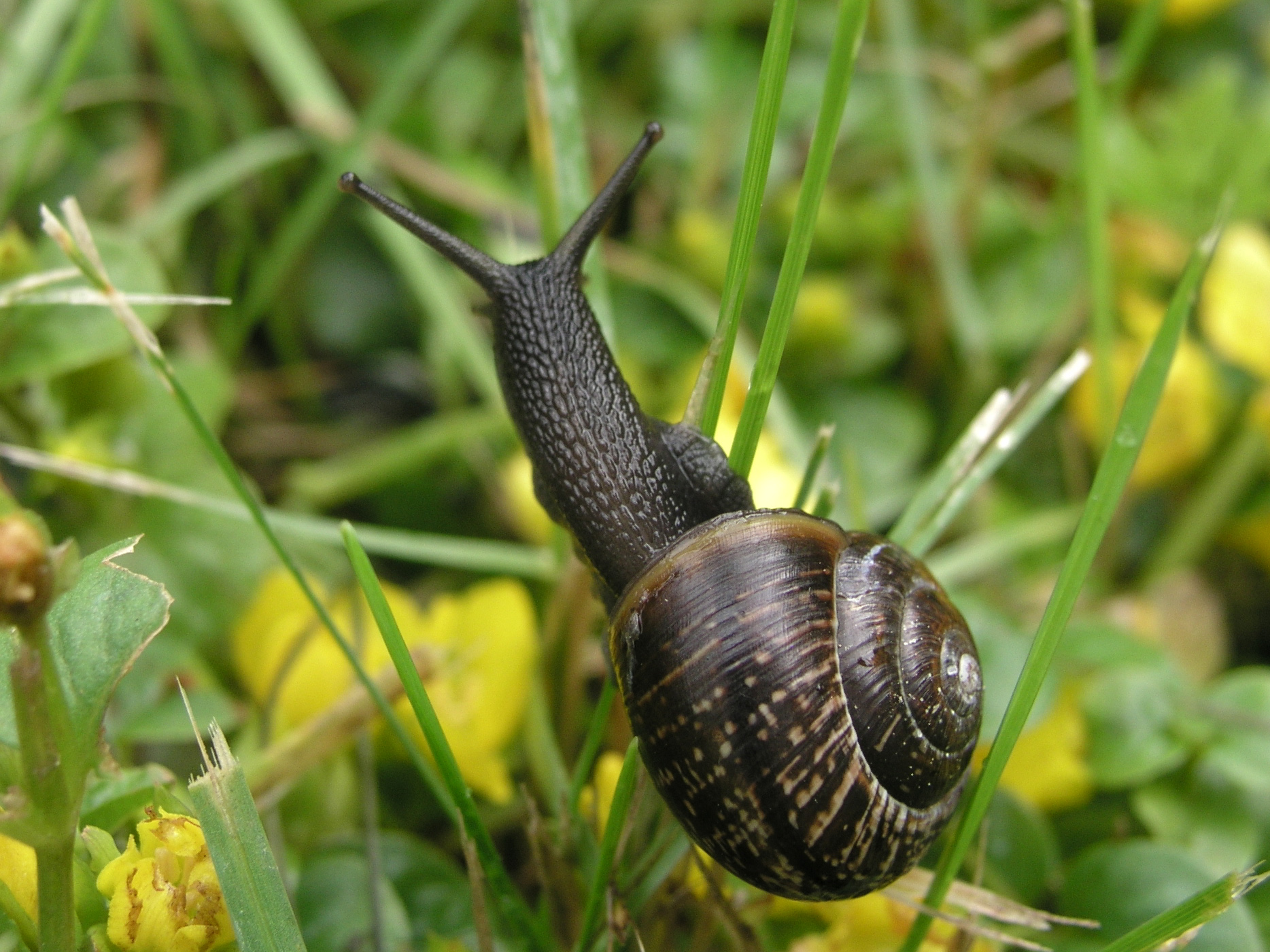


Happy reading and today, even if it is only a brief moment, observe (truly try to see) what is happening in nature around you. You won't regret it. 

  David


Saturday, May 11, 2013

Traveling Mercies--A Book Review


“It is unearned love--the love that goes before, that greets us on the way. It's the help you receive when you have no bright ideas left, when you are empty and desperate and have discovered that your best thinking and most charming charm have failed you. Grace is the light or electricity or juice or breeze that takes you from that isolated place and puts you with others who are as startled and embarrassed and eventually grateful as you are to be there.” 

"My heart was broken and my head was just barely inhabitable."
     
   Traveling Mercies, by Anne Lamott is a book that feels akin to getting to watch someone slowly and majestically discover something you've grown to love over a small lifetime of experience. The spin of a tire, the smell of a flower, the brightness of the sun's early morning rays, the joy found in the smallness of things. This book is about Lamott's journey to Christ in these tiny, gawky steps made of full awkward, common moments that we've all forgotten are truly and daily miracles. Most of us wake each day forgetting or even worse, never even contemplating, how many constant miracles surround us and how many miracles take place before we even put the key into the ignition to begin our work day. Lamott's account of her journey to Christ is story of discovery and a story of hope, but most of all it is a story about the greatest daily miracle: that Christ is still saving people from themselves and He is still making all things new. 
   
"I was sitting through the sermon now every week and finding that I could not only bear the Jesus talk, but was interested, searching for clues. I was more and more comfortable with the radical message of peace and equality, with the God in whom Dr. King believed. I had no big theological thoughts but had discovered that if I said Hello?, to God, I could feel God say, Hello, back. It was like being in a relationship with Casper. Sometimes I wadded up a Kleenex and held it tightly in one fist so that it felt like I was walking hand and hand with him."

     Reading Anne Lamott's, Traveling Mercies, was a constant exercise in removing the great sequoia-sized log from my own eye for almost every page. I say this because each day I forget the most important and the most profound item in my life and that is Jesus Christ saved me; the most sinful person on the planet. Period. I forget it. I take it for granted. I let whole days and weeks go by without really focusing on it. I, like the pharisees of old, look down from my self-built perch and say I understand grace and doll out mercy of my own making. I choose not to be floored by the fact that Jesus came back after conquering the cross, defeating sin and death, and descending into the very depths of hell to a small beach and helped the scared disciples feel the peaceful and commonness of the weight of living fish and taunt ropes in their hands and arms and he spoke calming and reassuring words to Peter; the man who had denied him. I choose to ignore the woman who just wanted to touch the hem of Jesus' robe. I choose to pretend I comprehend what it must have felt like to have my father turn his back on me and all for someone I knew was not going to be loyal to me or love for a whole hour. I, instead, feel as if I am doing God favors by praying to him and obeying him on occasion. I choose to bless God with my presence in church some days. I look at others who were not raised like me and don't believe like me with a great and secret disdain. I know this is true because I wish it were not. 
   
      A wise man once gave me marriage advice and told me to each day wake up knowing I am the most sinful person in my marriage and to constantly give my spouse half the grace and mercy she is giving me and I will have a long and happy marriage. I should be doing this to others and I am not. Lamott reminded me each night before I let my eyes shut of who I really am. Lamott knows who she is and she will let you, the reader, know. Lamott hasn't read all the right books. She doesn't understand God or really know who He is. She is not exactly sure about her salvation experience, but knows she needs saving. She doesn't understand grace, but knows she needs it. She is not exactly sure what she believes about some "key" issues within Christianity. She would side with being a "liberal" Christian every single time as long as grace, mercy, and love are shown. This last point was very convicting for me. Can we ever, ever focus too much on God's grace? Is that even possible?

"It is finally, so wonderful to have learned to eat, to taste and love what slips down my throat, padding me, filling me up, that I'm not uncomfortable calling it a small miracle. A friend who does not believe in God says, 'Maybe not a miracle, but a little improvement', but to that I say, Listen! You must not have heard me right: I couldn't feed myself! So thanks for your input, but I know where I was, and I know where I am now, and you just can't get here from there. Something happened that I had despaired would ever happen. It was like being a woman who has despaired of ever getting to be a mother but who now cradles a baby..."

     Traveling Mercies is not a book one should approach and read if you are looking for all the answers, or a great expounding of Scripture, or even a book like those written by Max Lucado or Joyce Meyer (Lamott may cringe at the thought of being grouped with those authors). Lamott is not a mainstream Christian. She is out on the fringes and she knows this and writes from this perspective. Each chapter is a story that could be self-contained, but when considered within the context of the book at large, there are similarities and I would say that those similarities are faith, grace, and brokenness. Each story is easily read and almost feels like modern day versions of the stories of all the people who come to Jesus when he was on earth because they had tried everything else and nothing had worked. Lamott's story is the same. It is all of our story, no matter the details. We stand at the edge of the Garden and we are not allowed in, but that is the only place we will ever find the peace we seek.

  Lamott's a great writer and is gifted at more than just putting sentences together. I disagree with so much that she writes about, but am glad I took the time to read her wonderful book. I feel it is so important to be reminded of how broken this world is and the people that fill it up and how powerful God's work is and how it is still spreading through time and throughout humanity in the smallness of items that we'd never expect it and is still shaming the wisest among us. And that redemption is nothing like what we think it is because we do not contemplate eternal and complete things and we've so badly twisted the ideas of goodness and grace that we'd fall prostrate ourselves like the prophet Isaiah once did if we ever got a glimpse of what they really meant. Lamott has seen a little of it and she will never be the same. I feel moments of it and it makes it hard to even breathe.

Happy reading and an even happier Saturday,

David


Monday, May 6, 2013

A Poem for Monday


BY CHANCE,

OF COURSE

WHILE ATTENDING THE ANNUAL CONVOCATION

OF CAUSE THEORISTS AND BIGBANGISTS AT THE
LOCAL PROVINCIAL RESEARCH UNIVERSITY, THE
MAD FARMER INTERCEDES FROM THE BACK ROW

"Chance" is a poor word among

the mazes of causes and effects, the last
stand of these all-explainers who,
backed up to the first and final Why,
reply, "By chance, of course!" As if
that tied up ignorance with a ribbon.
In the beginning something by chance
existed that would bang and by chance
it banged, obedient to the by-chance
previously existing laws of existence
and banging, from which the rest proceeds
by logic of cause and effect also
previously existing by chance? Well,
when all that happened who was there?
Did the chance that made the bang then make
the Bomb, and there was no choice, no help? 
Prove to me that chance did ever
make a sycamore tree, a yellow-
throated warbler nesting and singing
high up among the white limbs
and the golden leaf-light, and a man
to love the tree, the bird, the song
his life long, and by his love to save
them, so far, from all the machines.
By chance? Prove it, then, and I
by chance will kiss your ass.

--Wendell Berry

Pardon the language. Persevere through your Monday. Take time to enjoy something real.

Happy Reading,

   David


Friday, February 8, 2013

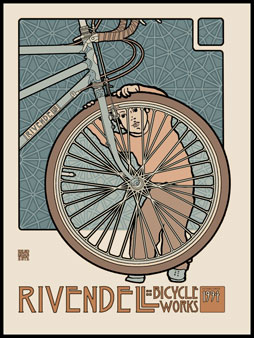
Grant Peterson, Rivendell Bicycle Works, and Bicycling Coversion

* Warning. Caution. Achtung. Precauci'on. A winding, passionate post lies ahead at the next scroll turn. This is a long post. Exercise extreme caution. --Editor in Chief of HTH


    A couple Saturdays ago, Mel said she needed to get out of the house and get some fresh air, so we loaded up the Subaru and headed out. Our first stop was to the Washington Memorial Library. We had some overdue books we needed to take back and Mel had a list of several books she was in the market for. We didn't want that library guy from Seinfeld to come after us. Well, I guess no one does.


     After I grabbed the books I was looking for, we (FH and I) helped Mel put a couple holds on several selections by standing very close to her and giving her loads of moral support. We also walked around the library looking in some corners we don't usually go to and we made our way to the section that has all the books about every sport or outdoor activity you can think of and I wanted to peruse their selection of bike books since I've been riding my bike more than running as of late and have been sort of consumed with many thoughts about bike design, bicycling, and commuting and if you ask Mel, she could easily say that my brain has looked a little like this:


Or


     And you would get this or at least be a little like this yourself if you would have spent the last month riding your two-wheeled machine back and forth from work for around 14 of the past 20 working days and in town for errands. So, we located the books they had about bikes and we both sat on the floor and pulled several selections from the shelf and gave them a very thorough looking over. FH was surprised they still had the books about or by Lance A. and he did make a couple wise cracks about the fact that, "it wasn't just about the bike", but we did find two great books and one that has made a big impact on my thinking about cycling. And when I say big, I mean gigantic. 
 
    If you know me, you know I tend to be easily influenced. This has been both good and bad at certain moments in my life. And once influenced, I tend to keep up an action or a thought for a very, very long time. I met this fine looking curly haired brunette girl almost 12 years ago and I am still trying to keep her as my girl.  I read my first Wendell Berry book around 10 years ago and I'm still talking about it. I ran my first mile when I was in the 8th grade and I'm still running. I strummed my first guitar 21 years ago and I am still playing. And now, two Saturdays ago, I picked up this book (see pic) and I can see it influencing the rest of my life in relation to cycling. 


    If you read my post about the Strava Base Mile Challenge, you know that I have really been rethinking my views about cycling. When I consider the amount of actual guilt-free, extra time in my life, I don't really have any. And when I think about how much time, effort, and money it would take me to get into the place and shape where I would be considered a real cyclist or a racer of some sort, it is not hard for me to become easily depressed. I don't see this happening in any realistic scenario, but this is where my thinking has been evolving. I love riding bikes. I really love riding bikes with my wife and am really looking forward to putting FH into one of these (see pic) and all three of us heading out into the sunset.


  I have always loved riding bikes even though when I was learning, I acquired the name "Clyde Crashcut" and have never really been that great or strong of a rider, I still love it. So, when I look at my very nice bike, a Trek 1000 SL that God gave me, I have two choices. I can either hang up the bike and walk away with my head down because I will never be a "real cyclist" or I can sell my bike and buy a three-wheeled trike and resolve to use it in a retirement community only. Those are two choices I didn't want to be forced into. I needed a third and much better option. I needed an option that was very similar to the one I had when I was a kid and used to ride my bike for hours around the neighborhood with my sister and friends. That is where my thinking has been headed and then I found a book with a red jacket written by this man:


Grant Petersen

   The man is Grant Petersen. He has spent his life around bikes both professionally and recreationally. He worked for the Bridgestone Cycle (USA) until they closed their North American doors in 1991 and when those doors closed, he opened up Rivendell Bike Works and that is where he is at today. At Bridgestone, he designed bike frames and bike components and now does basically the same thing for his own company, but with a completely different viewpoint. He used to build bikes like this:

  
But he now builds bikes like this:

The Atlantis, aka "David's Dream Bike"


And this:

The Hunqapillar


     He used to build and design bikes for pro cyclists, but now he builds and designs bikes for what he has called the "unracer". This is the term he describes everyone who loves cycling, but is not actually sponsored by a company and doesn't ride the major tours of the pro cycling circuit. Which makes up everyone besides around 500 people on the planet. If you look at the pictures closely, you can see some similarities because after all, they are all bikes, but when you take a closer look, you see how different they really are. His older designs are made of smaller frames, different components, complex gearing, and very skinny tires. While his new designs contain larger, more durable frames, wider tires, baskets and racks, different seats, different handlebars, and much different, and much simpler gear sets. His old designs are made of "racer" specific materials and aren't made to last, while his new designs are made of materials that will last one a very long time.

     Mr. Petersen is not shy about his views on cycling and gets a lot of flack for what his writes and what he says, but it doesn't seem to bother the guy because he keeps writing and talking. And his fame is radipdly growing because he has nit a nerve and a sentiment that a lot of other people are feeling as well. He has been given the name or title of being a, "retro grouch", which I think I know what is meant by the term, but am not completely sure. He ruffles a lot of feathers in the cycling community by dividing everyone into a "racer" or "unracer", but I don't see why, because he labels himself as an "unracer". I think there is a misunderstanding here. When I read Petersen describe an "unracer", I do not have the feeling he wants all cycling to become somewhat of an "Upward" sport where everyone is a winner, but instead wants people to realize that hobbies are things you don't have to do and if you are doing something that you aren't required to do by your life, then it shouldn't be something you dread. I completely agree. He also ruffles a lot feathers by being pretty rough on pro cycling and what designs, equipment, attitudes that come out of it. He feels that instead of good things trickling down from the top, he feels that pro cycling harms the sport instead of helping it. His biggest arguments really hit home with me and how I have been feeling as of late about cycling. To sum up Grant Petersen's core beliefs about cycling, I will use an excerpt from the book:

"...the message in this book is to jettison the influences of racing that make your bike less than fantastic. Don't suffer in the name of speed, imaginary glory, or Internet admiration; don't ride bikes that don't make sense for you; don't wear ridiculous outfits just to ride your bike; don't think of your bike as a get-in shape tool and riding as something you to have suffer to benefit from. Your bike is a useful convenience, and a fun, somewhat expensive, toy, and riding is best for you when it's fun." --page xi
 
     This is exactly the mindset that I've been trying to form and instead found it clearly written in the book instead. The book comes in at 212 pages including the appendix and is chock full of very useful and extremely practical lessons that Mr. Petersen has gathered during his life with bikes and among the cycling community at large. You can easily read the book cover to cover in a few sittings. I did and I'm a slow reader. Mel could read it in a single setting. It is written more like a magazine and less like a book. And if you like riding bikes, it will change the way you think about your hobby or it will at least challenge it. I found this book very, very enlightening and very helpful. In fact, I changed something about my bike after reading the book only for a few short moments. Whether he is discussing bike frames or the clothing one should wear while riding, he never strays too far from the above quoted feeling. The book is broken into eight parts and each part is full of a multitude of 1-5 page articles that if you love cycling and are willing to call yourself an "unracer", then you will find very useful and very rewarding. Here are few things I have gleaned from the book:


  • The correct way to pedal.
  • How to think about and use the 27 gears on my bike.
  • How anytime spent on the bike whether its 5 minutes or 5 hours is enough and worth it. 
  • How wearing everyday clothes is more practical and much cheaper than putting on loads of spandex.
  • A multitude of safety related matters that I instantly found useful in my daily commutes to work.
  • The correct way to wear a bike helmet. 
  • Good ways to personally and cheaply keep my bike running smoothly and how to keep it clean. 
  • The correct riding posture and position.
  • The differences of all the tires and which tires are for what. 
  • The differences in frame materials and why steel and aluminum frames are better than titanium and carbon frames.
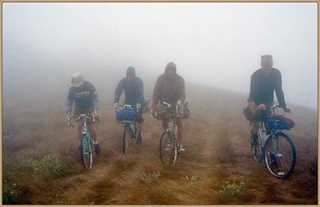
   These are not all the items I have acquired from the book, but it seems that I got something from all 89 sections of the book. I really enjoyed his section on "Velosophy". It was well-written and changed my thoughts about cycling forever. He spends his time in this section discussing how to change one's "bike-o-meter" and reinforces the idea of using your bike for fun and for commuting. I also really enjoyed his thoughts on how to make your family enjoy your hobby instead of hate it. The section on what he calls "S240's" got me very excited. All they are, are sub-24 hours overnight trips that you take from your house and cycle out about 2-3 hours from your home, camp out, and then ride back home. This is a very simple, yet awesome idea that I plan on getting my family (Mel & FH) to do as soon as Ford is old enough. The pic below is of some of the guys from Rivendell Bike Works on their way back from an S240. 


Picture33

  If you haven't read the book. Give it a read. It won't take you long and it will be worth your time. If you used to love riding your bike when you were a kid, but have given that type of riding up because you think you need to be the next stage winner of a TdF in order to be seen as legitimate to your peers, but hate spandex and don't have the time, desire, and an extra $15,000 to spend on a bike, but still want to ride around for fun, then Grant Petersen and this book are what you've been looking for. Since I've read this book, I have gotten wider tires put on my bike along with a rack on the back. I have also gone from using blinking lights to using solid lights when I ride early in the morning and at night. I have also acquired two steel framed bikes (for free from a family that was throwing them out) that I plan on converting to either neat, retro touring bikes or fixed-gear bikes. 

   I will end the post here. I could say more, but won't. Read the book. Look up Rivendell Bike Works. Subscribe to their blog. Look up Grant Petersen and read his other interviews. Go throw away your spandex, put on some regular clothes you love to wear, grab your wife and kid, and go for a ride like you did when you were a kid. If someone makes fun of you, feel sorry for them because they are really missing out on something cheap and very fun. And as Grant Petersen says, "don't count the miles, measure the minutes and the amount of joy you are gaining from riding." I couldn't agree more.  

Happy reading, riding, and watch the film at the bottom. It last almost 30 minutes, but you will gain something from watching it, even if you don't ride. 

   David

Thursday, December 20, 2012

This Week's Wisdom for Writing

This post has been waiting to be finished for the last two weeks. Many things have changed since then, but a few are still the same. Hope you enjoy the post. Better late than never. JDD


   The past week, this current week, and the next two weeks have been and will be full of life's many obligations and issues. The main one is that my Fall semester is coming to a screeching halt and that means final notes, Open House, the infamous "test" before the midterm, exams, grading, conferences, emails, meetings,  subject reviews, peer reviews, finalized curriculum plans, and salt-n-pepper in there a lot more grading and you will have about 1/2 of what I have been up to. Also, Fordzilla (See pic below. He looks so innocent, but know he is not!) has outsourced his sleep patterns overseas and just doesn't do much of it anymore. Which is ok for him, I guess, but it makes everything else just a tad bit harder. I did want to update my blog this week though and I really wanted to share some more of Steinbeck's, Journal of a Novel, with you. I hope you aren't getting tired of the excepts. If you are, we are almost done with them. I just feel there is so much to be gleaned from them whether you are a writer, a reader, or even just a human being living on the planet.


"The writer's of today, even I, have a tendency to celebrate the destruction of the spirit and god knows it is destroyed often enough. But the beacon thing is that sometimes it is not. And I think I can take time right now to say that. There will be great sneers from the neurosis belt of the south from the hard-boiled writers, but I believe that the great ones, Plato, Lao Tze, Buddha....,Christ, Paul, and the great Hebrew prophets are not remembered for negation or denial. Not that it is necessary to be remembered but there is one purpose in writing that I can see, beyond simply doing it interestingly. It is the duty of the writer to lift up, to extend, to encourage. If the written word has contributed anything at all to our developing species and our half developed culture, it is this: Great writing has been a staff to lean on, a mother to consult, a wisdom to pick up stumbling folly, a strength in weakness and a courage to support sick cowardice. And how any negative or despairing approach can pretend to be literature I do not know." Pg. 115-116


"And in other ways I seem to have been writing on this book all of my life. And throughout, you will find things that remind you of earlier work. That earlier work was practice for this, I am sure. And that is why I want this book to be good, because it is the first book. The rest was practice." Pg. 117


"To a certain extent I have thought about the reception of this book. And it seems to me that it might find a public ready for the open and honest. As you know the novel has been falling before the onslaught of non-fiction. That is largely because the novel has not changed for a very long time now. Sherwood Anderson made the modern novel and has not gone much beyond him. I think I am going beyond him. This may be rejected and kicked down but I do not think so. I really don't. However, this is a conjecture which will be demonstrated." Pg. 124 


"A book is as complicated as life, in some ways more complicated." Pg. 128


"I must have great violence in me because I react to violence in nature with great joy. And a good thunder roll makes me feel almost as though I could do it myself." Pg. 131

"...It is about time for something like that. and it is also time for gaiety. the death of Samuel has removed gaiety from the world. And I have to put some back in. For Eden must be everything, not only the grim and terrible because that isn't the way life is. Life is silly too sometimes and that must be in it. Everything I have seen or heard or thought must go in and I feel the necessity for release now." Pg. 131

"A book finished, published, read--is always an anticlimax to me. The joy comes in words going down and the rhythms crowding in the chest and pulsing to get out." Pg. 132

"I have been planting the book full of restlessness which precedes change. Just as history seems to ride up a series of plateaus, so does it seem to me that a man's life goes--up a little or down and then a flat place, and then another quick change and another plateau. In a book about a man, because of the restriction of space, the distance between the rises or falls is necessarily small and this must give a feeling of unreality." Pg. 134

"A cousin of mine--Pat Hamilton, son of George, grandson of Samuel and the only bearer of the name, the only one (isn't that odd)--died two days ago. He was an incurable alcoholic and died of a heart attack after a two-weeks' drunk. And there lies that family name. I have the blood and my sons but he had the name. I feel badly that he did not wear it well. He left it no pride and surely no shine. In fact he dirtied it...This is the tragedy of a name." Pg. 138

"A book, as you know, is a very delicate thing. If it is pressured , it will show that pressure." Pg. 139

"A book takes so long that people get tired of waiting. I know that. But I said at the beginning that this had to be written as though it would never get done." Pg. 139

"Today I have to do something I haven't done in this whole book. I have to eliminate some of yesterday's work and change the pace I had set for it. It has not been often. It was just wrong. But I don't mind. And surely that is a minimum." Pg. 144

"Maybe good, maybe bad. But I shall want to draw the reader into the personal so that he is reading about himself." Pg 145

"It has been good, but good things should not last too long or they cease to be good things." Pg. 145

Happy Reading,

   David 

Thursday, November 29, 2012

Wednesday's Wisdom for Writing


   We skipped a week of these excerpts because we figured most would be up to their eyelids in cranberry sauce, turkey, dressing, and holiday guests and there would be little to no time for the sitting down and letting your thoughts move through your pencil onto page or for your putting of fingers to keyboard. But we do want to continue on with more words from John Steinbeck's, Journal of a Novel. I am learning more and more from these and from the ones that don't relate directly to writing, it is so interesting to sit inside the mind of someone who created so much and think for a brief moment about the thoughts they once thought. Hope you enjoy these.

"And on my way to bed I was torn out of my pattern. I never write out of hours. But I came in and wrote the dialogue of Sam'l Hamilton which is in today's work--it tore out so rapidly that the words are nearly unreadable. It is a completely passionate piece of writing." pg 100


"I have sharpened up a new 12 of pencils, fine long ones. This is a kind of indulgence. How I love a new pencil." pg. 100


"And now I have set down in my own hand the 16 verses of Cain and Abel and the story changes with flashing lights when you write it down. And I think I have a title at last, a beautiful title, EAST OF EDEN. And read the 16th verse to find it. And the Salinas Valley is surely East of Eden." pg. 104


"You can see that my handwriting is a little haywire yet. So I will have to dawdle until it settles down. Change of desk has something to do with it I guess. I have a little room to work in and it is mine exclusively and I can look at the ocean out of my window. It has a desk to work on--not a titling desk, but an ordinary one. I will soon get used to that, I think. the question is one of rhythm. After a break, it takes time to get it moving in waves again. But that is simply a matter of keeping at it." pg. 105


"One is never drained by work but only by idleness. Lack of work is the most enervating thing in the world" pg. 115.

"It is the fashion now in writing to have every man defeated. and I do not believe all men are destroyed. I can name a dozen who were not and they are the ones the world lives by. It is true of the spirit as it is of battles--the defeated are forgotten, only the winners come themselves into the race. And Samuel I am going to try to make into one of those pillars of fire by whom little and frightened men are guided through the darkness." pg. 115

Hope you enjoy,

   David

Wednesday, November 14, 2012

Wednesday's Wisdom for Writing


   Well...today is Wednesday and it is time once again to attempt to glean wisdom and knowledge from John Steinbeck's, Journal of a Novel. I hope you are getting something from these posts or that you find them entertaining in the least or find them challenging at the most. Here are the day's excerpts:

"Now the day progresses and I haven't put down a word yet, but it is coming and I almost ready. Almost! I have the tone now" pg. 72

"And an amazing number of pretty girls are passing by my window. I like pretty girls very much but I am old enough now so that I don't have to associate with them and that's a relief" pg. 72 (Funny, right?)

" Of course--that's the way it has to go. So simple when it finally comes to you. That's the way it is. You fight a story week after week and day by day and then it arranges itself in your hands." pg. 72

"I believe too that if you can know a man's plans, you know more about him than you can in any other way. Plans are daydreaming and this is an absolute measure of a man. Thus if I dwell heavily on plans, it is because I am trying to put down the whole man. What a strange life it is. Inspecting it for the purpose of setting it down on paper only illuminates its strangeness. There are strange things in people. I guess one of the things that sets us apart from other animals is our dreams and our plans" pg. 75


"This is the kind of a day I like. I can do a few sentences, then stop and enjoy them. Most days there is something else to be done afterwards, but this is Tuesday, if I don't finish until evening, it doesn't make a bit of difference. And how nice that is." pg. 77

"You know it is about time for me to throw out a flock of pencils. They are getting short and I detest short pencils." pg. 77

"The callus on my writing finger is very sore today. I may have to sandpaper it down. It is getting too big." pg 78 (Oddly cool and weird, right?)

"I am ready and the words are beginning to well up and come crawling down my pencil and drip on the paper. And I am filled with excitement as though this were a real birth." pg. 83

"But I learned long ago that you cannot tell how it will end by how you start. I just glanced up this page for instance. Look at the writing at the top--ragged and angular with pencils breaking in every line, measured as a laboratory rat and torn with nerves and fear. And just half an hour later it as smoothed out and changed considerably for the better." pg. 85


"But I'm very glad the book is not finished--I would hate to have it done. I don't like to think of the time when it is done. That will be a bad day for me. A real bad day." pg. 88


"The book dies a real death for me when I write the last word. I have little sorrow and then go on to a new book which is alive. The line of my books on the shelf are to me like very well embalmed corpses. They are neither alive nor mine. I have no sorrow for them because I have forgotten them, forgotten in its truest sense." pg. 90

"I worked over the week end on that other story and had to throw it away again. It takes me so long in planning to do the simplest thing. I don't know what will come of that." pg. 98


Happy reading and writing,

   David


Thursday, November 8, 2012

Thursday's Wisdom for Writing


    I moved my Wednesday post to Thursday for this week due to the election. I wanted the results (of which I don't know at this time) to be able to sink in without much or any comments coming from us at HTH. I will say that today's excerpts from Steinbeck's, Journal of a Novel, seem very applicable to our current state of affairs.This shouldn't surprise me, but it always seems to. Truth when spoken clearly is timeless. Or better put by our favorite Miss O'Connor,  “The truth does not change according to our ability to stomach it.” I hope that you, the loyal reader, are enjoying these excerpts and that they are helping you in either your writing life or in your thoughts. I know I am still gleaning so much from them. Well, without further adieu , let us delve back into Mr. Steinbeck.


"Reflection is no bad thing although I must say in this time it is not a popular pastime." pg. 60


"If a man has too pat a style, his reader can after a little time keep ahead of him. I mean the reader will know what is coming by how it is done." pg. 62


"I did not get far from the book. I have thought of little else. It's strange how one can become so obsessed that there is always the double thing--the book and whatever else is going on and both running parallel. I guess it has to be that way." pg. 64-65


"Since you told me what the girl said about wanting to get on with the story and not stop for comment, I have thought a good deal about that. It is going to be one of the most constant criticisms of this book. People are insistent to get on with their lives too and not to think about them." pg. 65


(This next one is long. Take the time to read it. Maybe even read it twice.)

"You have said and Harold has often said that a big book is more important and has more authority than a short book. There are exceptions of course but it is very nearly always true. I have tried to find a reasonable explanation for this and at last have come up with my theory, to wit: The human mind, particularly in the present, is troubled and fogged and bee-stung with a thousand little details from taxes to war worry to the price of meat. All these usually get together and result in a man's fighting with his wife because  that is the easiest channel of relief from inner unrest. Now--we must think of a book as a wedge driven into a man's personal life. A short book would be in and out quickly. And it is possible for such a wedge to open the mind and do its work before it is withdrawn leaving quivering nerves and cut tissue. A long book, on the other hand, drives in very slowly and if only in point of time remains for a while. Instead of cutting and leaving, it allows the mind to rearrange itself to fit around the wedge. Let's carry this analogy a little farther. When the quick wedge is withdrawn, the tendency of the mind is quickly to heal itself exactly as it was before the attack. With the long book perhaps the healing has been warped around the shape of wedge so that when the wedge is finally withdrawn and the book set down, the mind cannot be quite what is was before." pg. 66-67

"I am learning how specialized I am and also that the degree of specialization is also the degree of limitations. Let me give you an example of what I mean. Let me give you an example of what I mean. When I work on a book to this extent and with this concentration, it means that I am living another life." pg. 67

"It has been a good day of work with no harm in it. I have sat long over the desk and the pencil felt good in my hand" pg. 68


"Then I forced the work and it was as false and labored and foolish as anything I have ever seen. I tried to kid myself that it only seemed bad, but it really was bad. So out it goes. and what do you suppose could have caused it? I just don't know." pg. 71


Happy reading and writing,

  David


Wednesday, October 31, 2012

Wednesday's Wisdom for Writing


   I don't know how much you, the reader, are enjoying these posts. I will say that going through Steinbeck's book, Journal of a Novel, has allowed me to revisit much of what I had gathered when I was reading through it the first time and I have even noticed other passages that I have gleaned a lot from. I would suggest reading each excerpt slowly and really thinking about each one. I believe there are multiple items one can learn from in almost each of the excerpts. Well, let's get to Steinbeck and away from Dark. 

"Now the innocent sound and the slight concealment are not done as tricks but simply so that a man can take from this book as much as he can bring to it." --pg. 16&17


"Now that I am in it (the writing of East of Eden) I cannot see beyond it and increasingly it becomes difficult for me to see out of it." --pg. 19


"I don't suppose writing consists in anything more than doing it." --pg. 19


"I don't understand why some days (in writing) are wide open and others closed off, some days smile and others have thin slitted eyes and others still are days which worry." --pg. 19


"It is always amazing to me how we forget our failures. I guess if we didn't, we could not survive."-- pg. 22


"And as I have mentioned before and again and again--a story has a life of its own. It must be allowed to takes its own pace. It can't be pushed too much. If it is, the warp shows through and the story is unnatural and unsafe."--pg. 23


"There are few enough true things in the world. It would be a kind of sin to conceal any of them or to hide their little heads in technique as the squeamishness of not appearing in one's own book. For many years, it did not occur in my writing. But this was only apparently true--I was in them every minute. I just didn't seem to be." --pg. 24

"A chapter should be a perfect cell in the whole book and should almost be able to stand alone. If this is done then the breaks we call chapters are not arbitrary but rather articulations which allow the free movement of the story." --pg 25


"Things do happen and continue to happen on the outside. Isn't it odd that I now regard the book as the inside and the world as the outside. And just as long as that is so the book is firm and the outside cannot hurt it or stop it. And I must be sure that it remains that way by never letting time go by without working on it. For it is one thing to have in one's mind that the book will never be done and quite another to let it stop moving." --pg. 27

"And the book does move along little by little....It lacks tension and that is just exactly what I want and intend it to do. But it may cause trouble to you as a publisher because people have grown to expect tautness and constant action. It's like in present-day theatre. If there isn't shouting and jumping around, it isn't liked. For people seem to have lost the gift of listening. Maybe they never had it." --pg. 29

"The fact of the matter is that you just cannot tell how anything is going to work or how hard or easy it will be. It always fools you." --pg. 35


(I hope the ghost of John Steinbeck doesn't read this blog after reading this!) 

"But God save me from amateurs. They don't know what they are but it is more serious than that. They immediately start rewriting. I never knew this to fail. It is invariable. For that matter, I think I dislike amateurs in any field. They have the authority of ignorance and that is something you simply cannot combat." --pg. 36


"Aren't they really living people? This is the time when I am glad I am or try to be a writer--the growth and flowering of something I seem only to plant and nurture for a while." --pg. 39


"And I think I want to make it clear that true things quite often do not sound true unless they are made to." --pg. 48


"I am not writing for money any more now than I ever did. If money comes that is fine, but if I knew right now that this book would not sell a thousand copies, I would still write it." --pg. 55


Happy Reading and thanks for stopping by,

   David

Wednesday, October 24, 2012

Wednesday's Wisdom for Writing


  As I mentioned, the good folks here at HTH  will be enlightening your Wednesdays from now on with some wisdom and knowledge that we have gained from some of the finest writers of the past hundred years. We do this in an attempt to share what we have learned in hopes it will enrich both of our lives and our writing. An item that I also really found very cool about Steinbeck's, Journal of a Novel, but failed to mention in the original blog post is that each letter is dated with the day on which Steinbeck wrote it and the days and their numbers correspond to the year 2012. It added to the book for me because it was as if I were reading it on the same day that Steinbeck wrote it. I know that is somewhat delusional, but it still felt neat to me. Well, without further adieu  here are some more great quotes from the book: 


 "A good writer always works at the impossible. There is another kind who pulls in his horizons, drops his mind as one lowers rifle sights. And giving up the impossible, he gives up writing." pg. 4

   "And so I start my book addressed to my boys. I think perhaps, it is the only book I have ever written. I think there is only one book to a man. It is true that a man may change or be so warped that he becomes another man and has another book but I don't think that is so with me."  (Steinbeck has previously published 22 books including, Of Mice and Men, and, The Grapes of Wrath) pg. 5


   "Surely I feel humble in the face of this work." pg. 5

   "But I want to write this one as though it were my last book. Maybe I believe that every book should be written that way." pg. 8


"My choice of pencils lies now between the black Calculator stolen from Fox Films and this Mongol 2 3/8F which is quite black and holds its point well--much better in fact that the Fox pencils. I will get six more or maybe four more dozens of them for my pencil tray. and this is all I am going to do on this my first day of work." pg. 9


"I suffer as always from the fear of putting down the first line. It is amazing the terrors, the magics, the prayers, the straightening shyness that assails one. It is as though the words were not only indelible, but that they spread out like dye in water and color everything around them. A strange and mystic business, writing. Almost no progress has taken place since it was invented. The Book of the Dead is as good and as highly developed as anything in the 20th century and much better than most. And yet in spite of this lack of continuing excellence, hundreds of thousands of people are in my shoes--praying feverishly for relief from their word pangs" pg.9

"The pipes are tasting very good. I have a feeling to buy a meerschaum and start coloring it as I do this book. Maybe I will do that. By the time the pipe is brown the book should be done. More magics. I think tomorrow I will look for a meerschaum, a small light one. Saw one in a window the other day, but I forgot where..." pg.13

"You know I always smoke a pipe when I work--at least I used to and now I have taken it up again. It is strange--as soon as a pipe begins to taste good, cigarettes become tasteless..." pg.17

"Of course I feel that any imposed institution, even conditioned, is bad and not conductive to the development of the two great foundations of art and science: curiosity and criticism." pg. 15


Happy Reading and Writing,

    David


Friday, October 19, 2012

Calico Joe--A Book Review


   I have never read a John Grisham book. Gasp! Sigh! There...I said it. I even have a paperback copy of Grisham's novel, "A Time to Kill", that was given to me by a former student that has been sitting in my attic waiting to be read since 2006. I don't know what it is. I find myself looking at the book sometimes telling it that, "Its me, not you." Its not that I'm afraid of Grisham or that he writes about things I'm not interested in. I guess it was the ever-present "New York Times Best-Selling Author" title that accompanies his name that makes me so nervous or self-conscious. I just had this vision of me picking up a book of his and Flannery O'Connor watching me do so from a chair in the corner and then shaking her head at me. However, several weeks ago, my mom mailed us a package of goody's and in the package was this book with a note that said, "I know you don't have time to read, but when you do, read this."And I decided to flub my nose at Miss O'Connor and my pride and settle down each evening to the words of Mr. Grisham, a "New York Times Best-Selling Author". My mother after all is the one who retaught me to read and then introduced me to the difference between just reading and reading good books. And there is a difference. It is akin to the difference of watching someone kiss in a movie and actually kissing or looking at a picture of a sunset and seeing one from the top of a lone mountain ridge and feeling as if you are the last human among a planet older and larger than life itself.

  It is odd how subjects move in cycles for me. Several years ago, it seemed like everything that made its way to me had something to do with cycling. Last year, it seemed like everything was about gardening and composting. But this year, it has been baseball. We have been to some games, we took Ford to his first game, the Braves made it to the post season, Ford and I have been making our way slowly through the Ken Burns documentary about baseball, and then my mom mailed me the book, Calico Joe, which was and is about baseball. So, 2012 may be an election year, but for me, it has been the year of baseball.

  I will make two good observations and one bad observation about the book. We will start with the good. Calico Joe, is a very easy read and this was a nice change of pace for me since the only time I really get to read is right before I fall asleep and if you ask Mel, I am getting better and better at that. (This may NOT be a good thing.) Several years ago, I used to think that books that were "easy" to read were easy to write and thus made the author either lazy or not very-talented, but I think very differently about this now. I have seen many authors ranging from Steinbeck to Twain and many others who say that if it reads easy, it was very hard to write. And I guess that is true in most anything else. When you watch a professional anyone or anything, they make whatever they are doing look easy. If you took any time to watch the Olympic Games, you know what I'm talking about. If you didn't catch them, go to the Food Network, watch one episode of the Barefoot Contessa, then find that same recipe and try it at home. You will then understand. Or go find a poem written by John Keats or Emily Dickinson, read it several times, then go try to write a poem about the same subject and try to fit all that he or she does into the same amount of lines. I'd suggest starting with Keat's, Ode to a Nightingale. Calico Joe, is both an easy read and it is also an enjoyable read. There are times when you feel the book and the characters in the book are real because Grisham does such a fine job weaving real events that occurred in baseball's long and storied history with events that he made up. I enjoyed this facet of the book very much and am so glad I got to read this book. And if you like baseball, I would suggest this book. It makes you want to visit a ballpark or at least go pick up your glove and get in some throws before you go eat some Stove Top from Johnny's house.

  Now for the bad...I really didn't care for most of the dialogue that was in this book. Each time it surfaced, for the most part, it felt contrived and forced. And please know I do not in any way think I know much of anything about writing in general or about writing dialogue. I do know that writing dialogue is exhausting and when you read it back to yourself, it all feels contrived, silly, and very forced. Many times, I would catch myself reading through the dialogue and asking myself if someone would really say that and I was left saying, "no". I wish that this wouldn't have been so because the dialogue really took away from the story rather than adding to it. All the people in the book spoke as you expected them to speak or spoke like characters in movies speak, not like people who breathe real air and interact with real, non-virtual people speak.

  After reading this, I would say that I enjoyed the book. I would suggest the book. I would even go as far as to say that I might climb into my attic now that its not 150 degrees in the shade in middle Georgia now and get the Grisham book that I've kept locked away and place my beloved Indigo Bunting bookmark that I bought for $1 from the Birmingham Audubon Society seven years ago within its worn pages. Something I would suggest is reading Bernard Malamud's novel, The Natural, before or after this book and then comparing and contrasting the two. And I believe the teacher in me just came out, so I'd better finish off this post.


Happy Reading,

   David